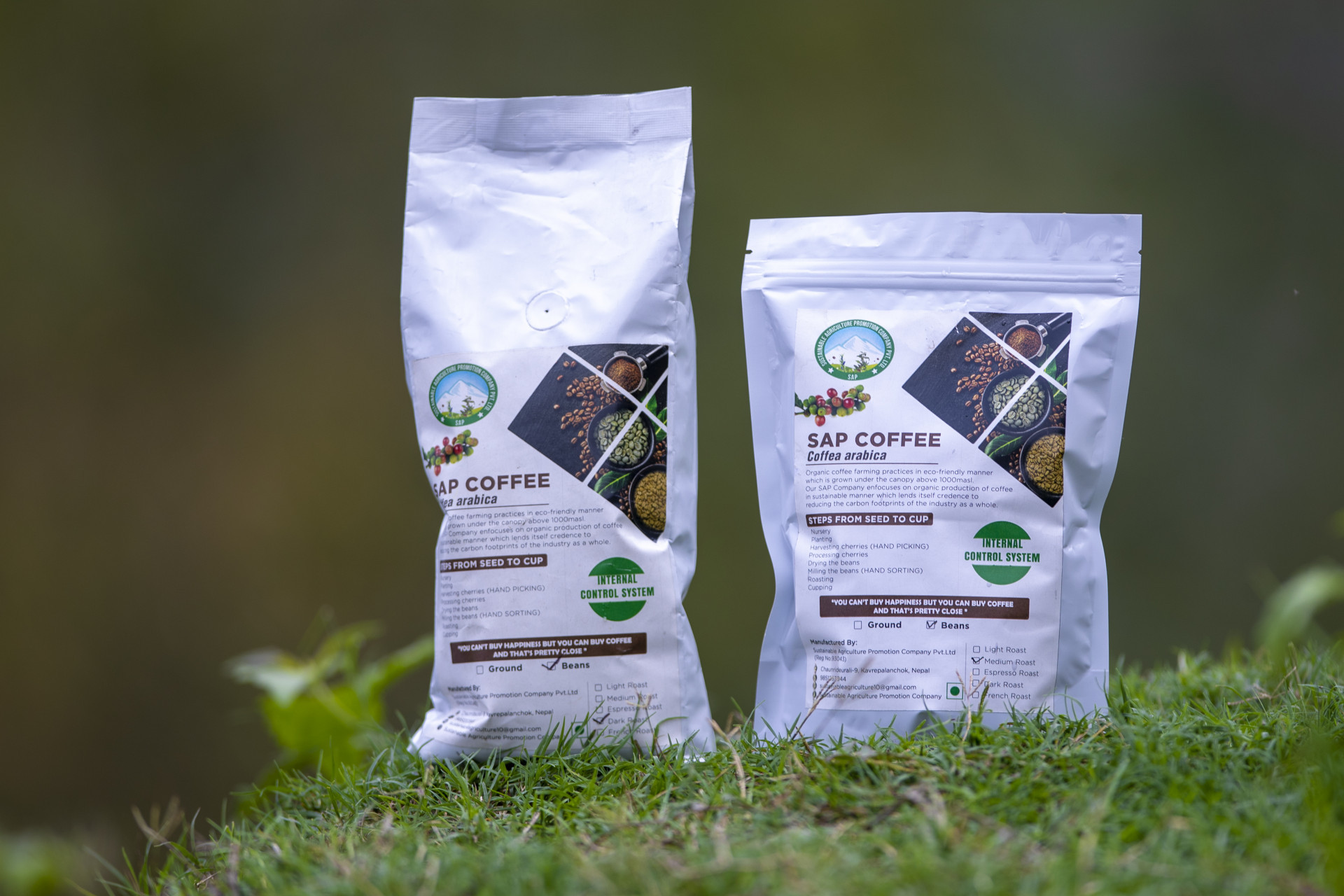
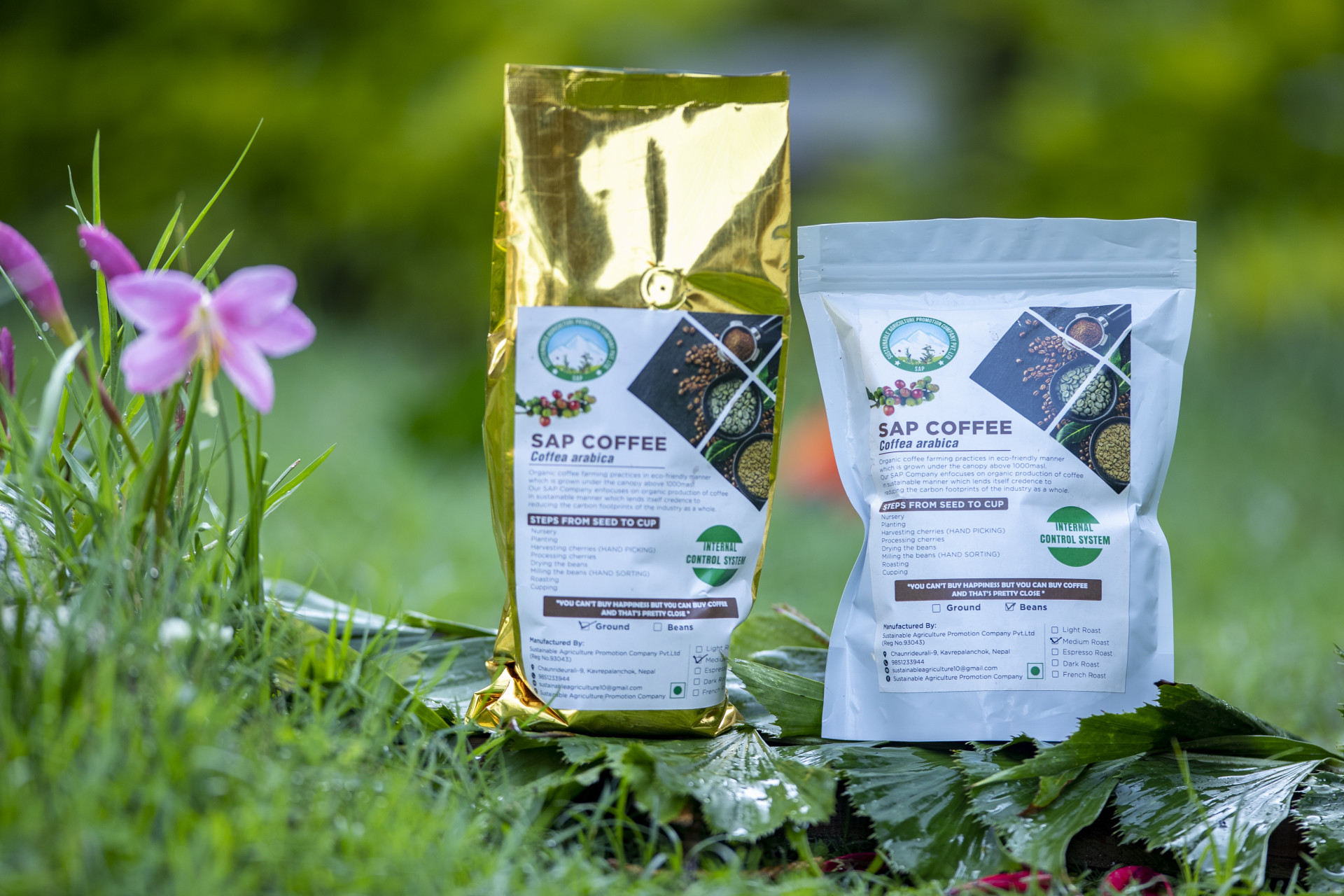
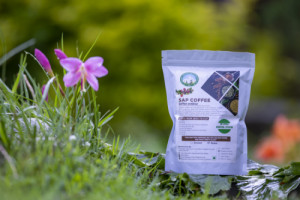
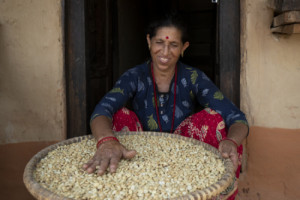
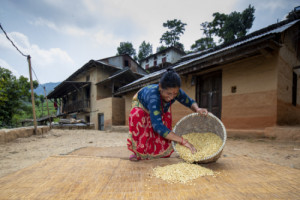
Our coffee is processed as naturals for roasted coffee, ground beans, green beans, and parchment.
Our production is currently small at half a ton but by 2025, we will be producing 1 ton for the B2C domestic and international markets.
Smallholder farmers can access two community coffee washing stations (CWS) in Lamjung and Sindhupalchowk. The coffee is processed using a pulper machine, then washed, fermentation-washed, and dried, before it is finally ready as parchment.
After processing, we collect coffee cherry peels in a compost pit and collect the wastewater in a pond. It is treated and then we use it to irrigate the plants. In autumn, the falling forest leaves are used as mulch.
Bourbon
green beans
Bourbon
Arabica
Arabica
Bourbon
ground, medium and dark roast
parchment
medium and dark roast
parchment
Our coffee is roasted by Govinda Raj Giri in Banepa, central Nepal, 25km from Kathmandu.
Roasting makes the hard work of farming coffee ready to taste in a cup. It is an artform.
Rather than selling green beans, we love to sell roasted and ground coffee – it is blissful to hear our customers’ feedback.
Roasting also allows us to add value to our green beans, offer a better price point, and ultimately, return more money to our farmers.
Coffee is the perfect companion in winter. Wet weather and snowstorms can make journeying outside miserable. The chill can get right into your bones leaving you unable to warm up all day.
A hot cup of coffee can heat up your body, protecting it from the elements. Your commute to work is so much enjoyable with a toasty travel mug of delicious SAP Nepali coffee.
Phone or DM: +977 985 123 3944
Message SAP Coffee on Facebook
@sustainableagriculturepromotioncompany
Share with your friends
Special:
10% off till
Chhath festival
(30 October)
SAP takes people’s health and wellbeing seriously. Diversifying into other, compatible products also makes our coffee business more sustainable. And we can employ more people throughout the year.
We want people to understand different types of coffee so they can make informed choices. There is a huge difference between organic coffee beans (naturally grown) and instant coffee (chemically processed). Teaching people this is our responsibility. Let's start the consumption of organic coffee in our own country.
As an agricultural scientist intent on diversification, the value and health benefits of coffee are important. We want to help build the coffee industry in Nepal and share the attributes of coffee.
Health benefits: Coffee contains “more antioxidants”, according to Joe DeRupo, a spokesperson at the US National Coffee Association. Antioxidants have great health benefits by cleansing waste from the body.